A Brief History of Photography: Part 2 – Daguerre

As noted in Part 1 of this series, Joseph Niepce is generally acknowledged as the first successful photographer, through his achievement in 1827 of capturing, via his heliography process, an image that remained light-fast (did not continue to darken when further exposed to light). This process was limited by the extremely long exposure time required by the materials involved.  Shortly after this achievement, he was introduced to French artist and businessman Louis Jacques Mande Daguerre (1787-1851) through their optician, Charles Louis Chevalier, who manufactured the lenses for their cameras obscura. Together they strove to improve the process Niepce had fathered. Continue reading “A Brief History of Photography: Part 2 – Daguerre”

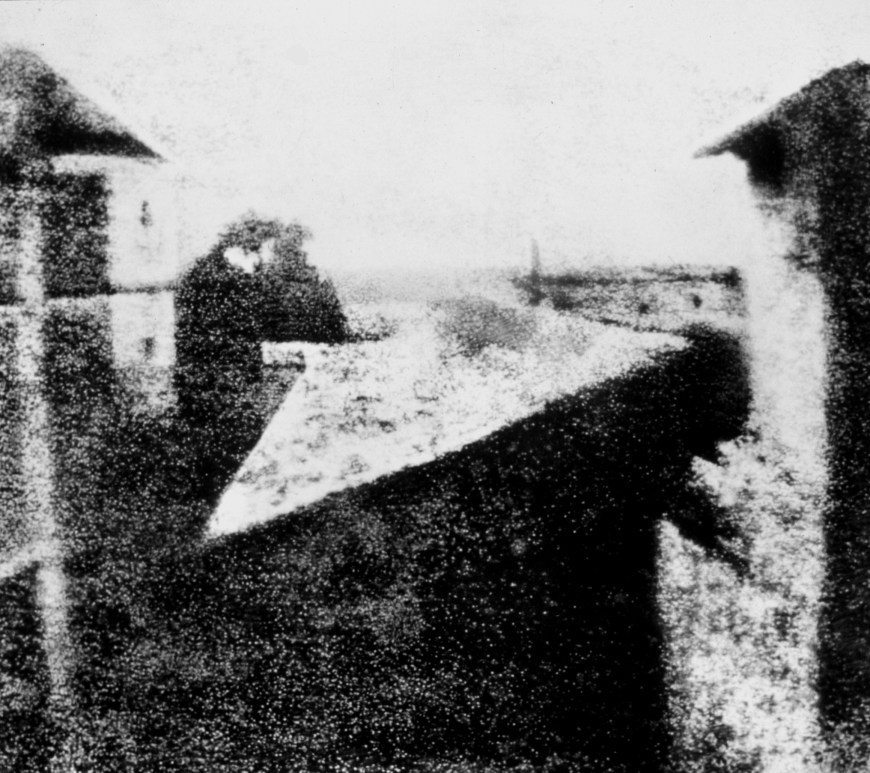
A Brief History of Photography: Part 1 – The Beginnings

The term “photography” was coined by Sir John Herschel in 1839 from the Greek, “phōtós,” meaning light, and “graphê,” meaning “drawing,” or “drawing with light.” Photography today has a different meaning for different people; for some it is a profession, for others an avocation.  Regardless, all photography today still addresses a primary need first articulated by prehistoric man painting on cave walls – to record images of himself, his activities, and the world around him, both for documentary purposes and for artistic expression.  While the technology has progressed, this basic principle has endured, and the efforts of those before us to achieve these ends both inform us and build the foundation from which we can move forward to advance the art. Continue reading “A Brief History of Photography: Part 1 – The Beginnings”